– Advanced Diagnostic Imaging
Unrivalled soft tissue imaging without ionising radiation — the gold standard for brain, spine, joint and organ assessment.
Appointment Duration
30–60 min
Preparation
Results
Price
From £850
– What is an MRI Scan?
Magnetic resonance imaging (MRI) uses powerful magnetic fields and radio waves — not ionising radiation — to produce highly detailed images of the body’s internal structures. It is particularly superior for imaging soft tissues such as the brain, spinal cord, nerves, muscles, tendons, cartilage, and abdominal organs.
During the scan, you lie inside a large cylindrical magnet. The machine produces a series of loud knocking sounds as sequences are acquired — ear protection is always provided. The scanner is open at both ends and well-lit, though patients with significant claustrophobia should discuss this with us before booking.
Some MRI scans require a contrast agent (gadolinium) injected into a vein to enhance the visibility of certain tissues or abnormalities. Where contrast is not required, no cannula is needed at all — the scan is entirely non-invasive.
Your scan is carried out at one of our partner hospitals, in Surrey or central London, whichever is most convenient for you. Booking starts with a short telephone consultation with one of our GPs (£20, redeemable against the cost of your scan), who will check the test is right for you and arrange your referral. We then book your appointment at your preferred hospital and confirm the details with you directly.
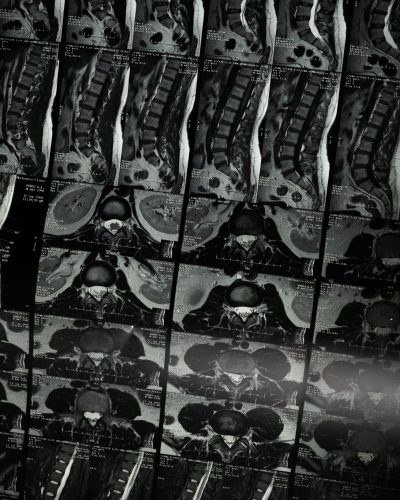
Types of MRI Scan
We image a wide range of areas by MRI. Please specify the area of concern during your telephone consultation.
Your Appointment
Booking starts with a short 10-minute telephone consultation with one of our GPs (£20, redeemable against the cost of your scan). They’ll check the scan is right for you and arrange your referral, then book it at your preferred partner hospital in Surrey or central London. We confirm all the details with you directly.
Many modern pacemakers and implants are MRI-conditional, meaning a scan can be performed safely under specific conditions. Some older devices are not MRI-compatible. You must disclose all implants and devices on your safety questionnaire. Our team will check the compatibility of your specific device before your appointment. Dental fillings, joint replacements and most surgical clips are generally safe.
Yes — MRI scanners make loud repetitive knocking and banging sounds as the imaging sequences run. This is entirely normal and not a sign of any problem. We always provide ear protection (earplugs or headphones) and in most cases you can listen to music through headphones to help pass the time more comfortably.
Many claustrophobic patients successfully complete MRI scans with the right support. The scanner is open at both ends and well-lit. We can arrange for a companion to be present in the room (screened for metal), offer headphones with music, provide a fan for airflow, and advise on positioning strategies. For severe claustrophobia, your GP may be able to prescribe a mild anxiolytic medication. Please discuss this with us when booking.
Fasting is generally not required for most MRI scans. However, abdominal MRI scans (particularly liver, MRCP, or small bowel studies) may benefit from a period of fasting to reduce bowel motion artefact. Where fasting is required, our team will provide specific instructions when you book.
mpMRI of the prostate is the recommended first-line imaging investigation for suspected prostate cancer, as it can identify and grade suspicious areas before biopsy, reducing the number of unnecessary or targeted biopsies. It typically includes at least three MRI sequences (T2, diffusion-weighted, and dynamic contrast-enhanced), reported using the standardised PI-RADS scoring system. Please discuss with your urologist or GP whether this investigation is appropriate for you.
Yes. Your written report is emailed directly to you, usually within 3–5 working days and often within 24 hours. If you’d like to go through what it means and any next steps, you can book a private GP consultation (from £60).

45 South Street,
Dorking,
Surrey,
RH4 2JX